
How Arrest Warrants Work in Titus County
A judge or magistrate signs an arrest warrant, and from that point an officer has legal authority to take someone into custody. The paperwork usually rests on a sworn complaint. Probable cause has to be laid out in an affidavit before any signature. In Titus County, felony cases move through the 76th or 276th Judicial District Courts. The judge, the case number, the charge, and the court all shape who can actually answer a status question. There is no countywide warrant search form on the sheriff's site. Call the Sheriff's Office warrants contact first. Then verify with the issuing court. For district files, the District Clerk is the records route. A justice of the peace or municipal clerk handles the lower-court process named on your citation.
Titus County Arrest Warrant Affidavits
Texas criminal procedure spells out what an arrest warrant must contain and what backs it up. A sworn complaint or affidavit puts the facts in front of the judicial officer. The warrant then names the person, the offense, and the officer authorized to execute it. Court level depends on the case. When you request a record in Titus County, name an existing cause or warrant number so the clerk can check sealing, juvenile, or investigative limits. The Texas Code of Criminal Procedure, Chapter 15, and Chapter 45A set out the state and lower-court process. Ask the issuing clerk which statute and file apply. Do not assume one county form covers every arrest warrant.
Arrest Warrants: What They Contain
The court file often holds more than any public list would. Titus County publishes no felony-warrant sample online. So ask the clerk about the fields described here. A Mount Pleasant traffic PDF uses a different city-list schema, and it is not a model for a felony warrant.
| Case | Cause number and issuing court or magistrate. |
|---|---|
| Basis | Complaint, affidavit, or indictment reference, subject to access rules. |
| Offense | Charge and statutory classification recorded by the court. |
| Release terms | Bond amount/type or a hold notation, if public and applicable. |
| Return | Issue, service, return, and current status entries. |
| Sample | No public felony sample located; ask the clerk for the actual case identifier. |
Titus County Warrant Service Roles
The Sheriff's Office serves both warrants and civil papers. County constables publish the same peace-officer duties. Mount Pleasant Police handles city policing. Adults its officers arrest go to the Titus County Jail. Those are service and custody roles only, and the issuing court still sets bond, recall, and the next setting.
| Office | Published local role | Use for |
|---|---|---|
| Titus County Sheriff | Warrants, civil papers, jail, and court security | County warrant contact and service routing |
| Constables | Peace-officer duties and warrant service | Ask the court which precinct or agency has process |
| Mount Pleasant Police | City policing; arrested adults go to county jail | City matter or custody routing |
| U.S. Marshals | Federal and fugitive process | Federal case, not a county-court clearance |
Titus County Sheriff’s Office
Warrants: warrants@co.titus.tx.us
903-572-6641
How Warrants Get Served in Titus County
A warrant starts with the court. The court issues or authorizes the process, then sends it to an officer or agency with authority to serve it. In Titus County, the sheriff and the constables publish warrant-service roles. Mount Pleasant Police is the channel for city policing, and its page routes adult arrests to the county jail. No public assignment map says which agency serves each individual warrant. Service and records custody are two different things. An agency may know it received or executed a warrant. The issuing court still holds the case. Only that court can confirm bond, a reset, or a recall in Titus County. Ask the court to name the serving agency instead of guessing from where a person lives.
Article 15.26 and Titus County Warrant Copies
Article 15.26 of the Texas Code of Criminal Procedure covers two things. It governs notice of authority at the time of arrest. It also opens public access to an executed arrest warrant and its supporting affidavit. But it does not convert unserved, sealed, juvenile, or investigative records into a public online roster. A copy request should name the issuing court and case identifier. The records office can then explain what it may release. The Texas Judicial Branch open-records policy explains how Rule 12 interacts with Article 15.26 and other law. That access point applies after execution. It promises no live warrant status search on a Titus County website.
Read the state court open-records policy.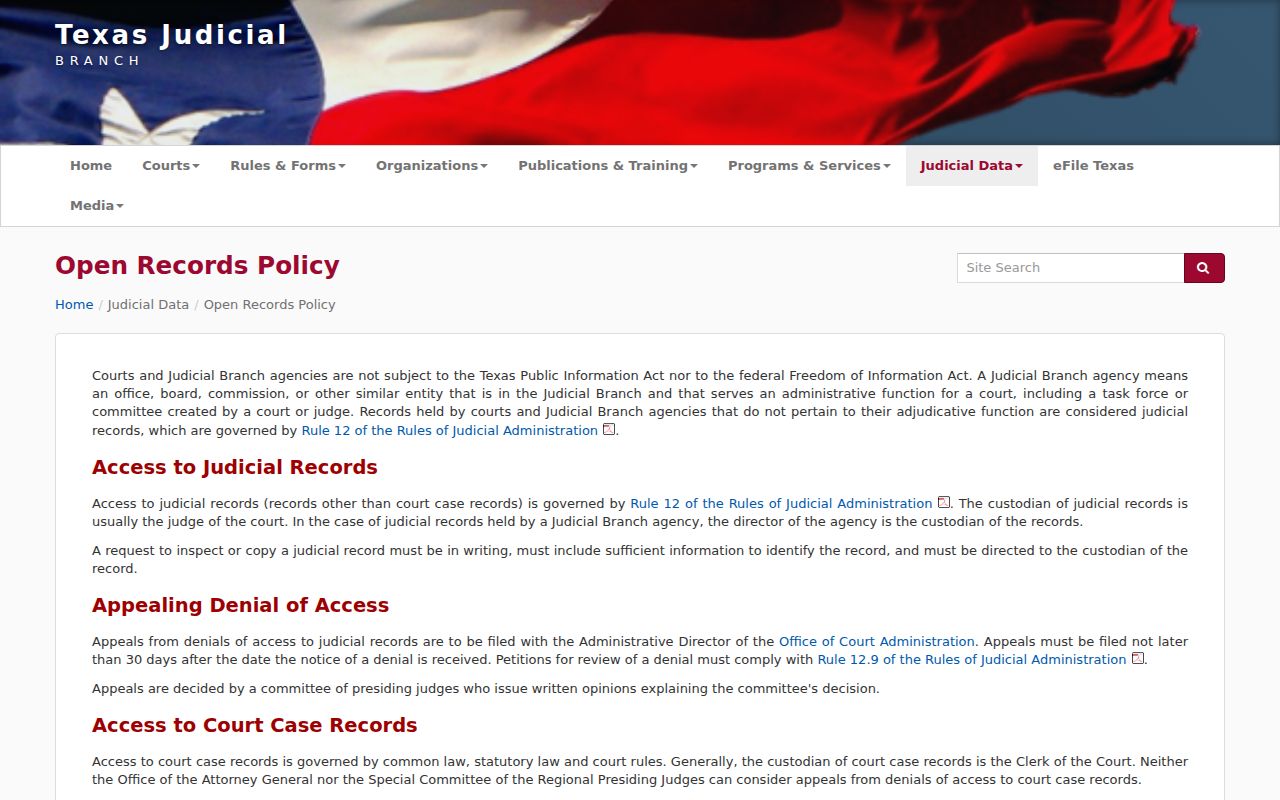
Even when state law makes an executed warrant copy public, ask the Titus County issuing court for the current record.
Arrest Warrants, Summonses, and Bench Warrants
These terms describe different court actions. An arrest warrant authorizes taking a person into custody. A summons or citation orders a response or an appearance instead. A bench warrant usually follows a missed court duty or order. In Titus County, the case court can tell you which document was issued and whether another appearance or filing is still due.
| Process | Why it appears | First status contact |
|---|---|---|
| Arrest warrant | Authorized arrest process based on the case and legal showing | Issuing court and Sheriff’s warrants unit |
| Summons or citation | Notice to answer or appear | Court printed on the document |
| Bench warrant | Missed setting or failure to follow an order | Court that set the obligation |
Mount Pleasant Warrant Arrests Reach County Jail
Adults picked up by Mount Pleasant officers end up at the Titus County Jail, according to the city's warrant and police pages. Need custody details? Two numbers are published. The city page gives 903-572-6641 ext. 1 for jail information. The Titus County sheriff page lists 903-577-7200. Because the numbers differ, confirm the current custody line before you rely on either one. A jail call tells you where someone is held, but only the court can speak to an active warrant's legal status. The police page also splits emergency instructions, citation routing, and records contacts apart. A police-records request is not the same as asking Municipal Court whether a city warrant is active. Call the office that fits your question. Keep the arresting agency and the court name together on every call.
View the Mount Pleasant Police Department page.Handling an Arrest Warrant in Your Name
Never guess at surrender or payment steps in Titus County. Call a Texas defense attorney. Call the issuing court too. Ask whether the matter is bondable, whether an attorney-arranged walk-through is accepted, and whether a motion to recall or quash fits your case. Titus County publishes no standard surrender form, no bond-window schedule, no accepted-payment list, and no universal bond chart. Be careful with listed amounts. A figure may be a fine or fee rather than bond. Ask for written instructions and keep the receipt or court order. Once the court acts, ask when the sheriff, city, or state compliance system should show the change. Posting bond can address custody and secure an appearance, but it does not by itself end the charge or remove a future court date.
Important: Speak with counsel and confirm the issuing court’s process before appearing; Titus County has not published standard surrender instructions.
Federal Warrants Are Not Titus County Warrants
Titus County sits in the Eastern District of Texas. A federal warrant belongs to a federal case. No Titus JP or municipal court can clear it. The Marshall federal courthouse and the U.S. Marshals district office are separate routes, and PACER may show public docket entries without serving as a universal warrant list. Sealed matters may not appear there at all. The Eastern District of Texas Marshall page gives courthouse contact and access information. The U.S. Marshals district page lists Eastern District offices and a fugitive-task-force contact. Have an identified federal case? Use the federal clerk or your counsel. A Titus County court cannot clear federal process for you.
Open the federal courthouse information.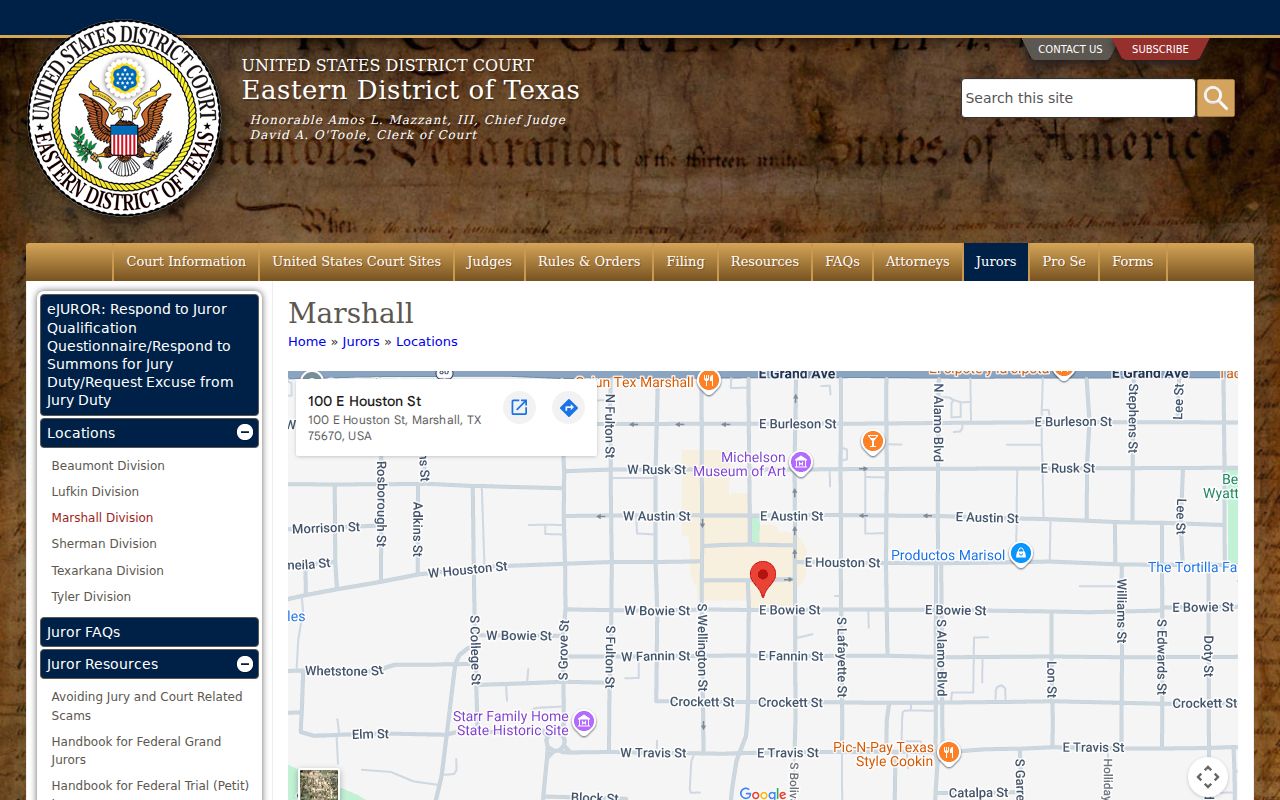
A federal courthouse sits near Titus County. Its presence never turns a state warrant into federal process. PACER explains docket access fees and page limits for federal filings.
Review PACER’s official pricing information.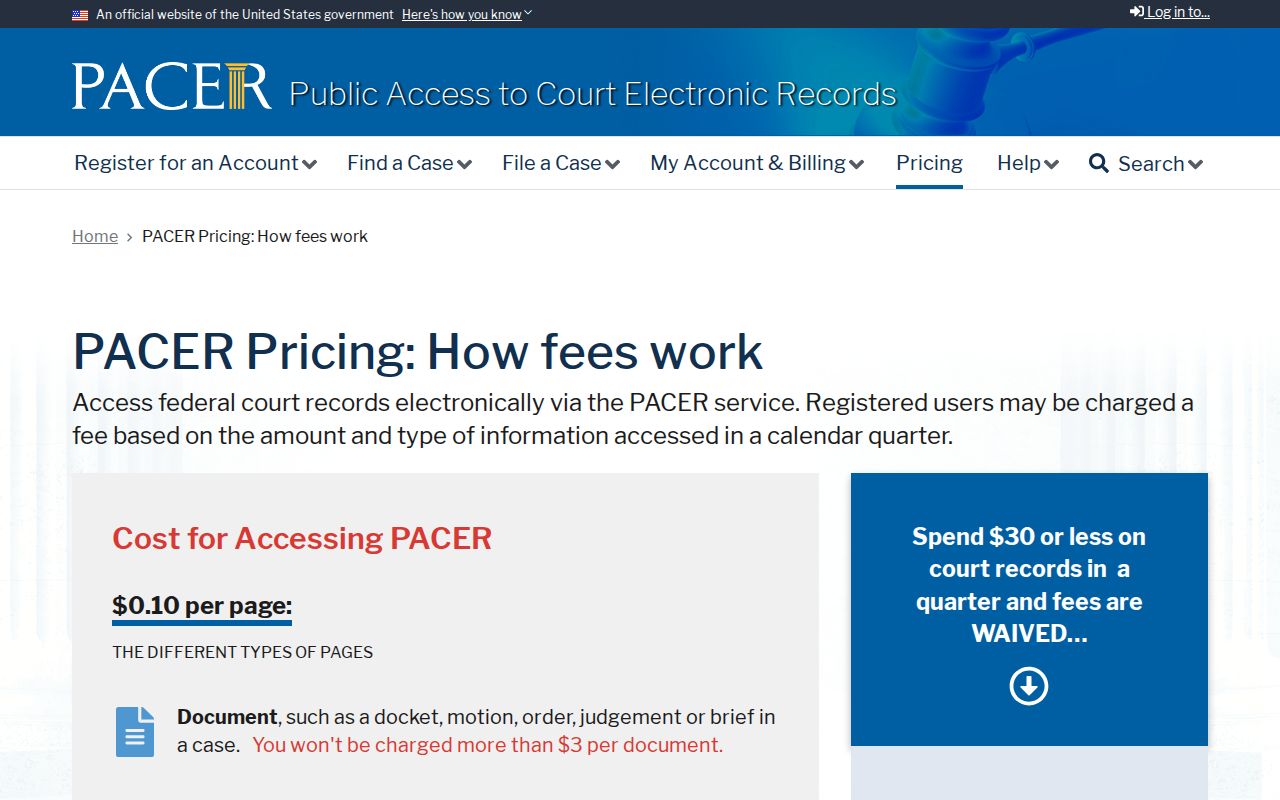
Titus County readers with a federal case number should use it, since public docket access is not a warrant-status check.